
CALIFORNIA — Pacific Gas and Electric Co. (PG&E) has unveiled a new Continuous Monitoring Center aimed at detecting risks on its electric grid before they lead to wildfires or power outages.
The utility announced May 1 that the first-of-its-kind centralized hub in San Ramon continuously monitors PG&E’s electric system using machine learning, data analytics and information from tens of thousands of sensors installed across the grid, as well as approximately 5.5 million SmartMeter devices.
According to PG&E, the Continuous Monitoring Center analyzes grid conditions in real time and allows trained experts to identify emerging issues and dispatch crews before problems escalate into outages or fires.
“Much like a smart watch alerts you to changes in your health, the Continuous Monitoring Center analyzes signals across PG&E’s electric system and flags abnormalities that require attention,” the company stated in a news release.
PG&E said the monitoring capabilities delivered measurable results in 2025, including intercepting 17 potential ignitions in high fire-risk areas, avoiding 12 million minutes of unplanned customer outages, reducing emergency outage response time by 2,620 hours and saving approximately $6 million in operational costs.
“The threat of wildfire requires more than incremental improvement, it demands a different kind of vigilance,” said Mark Quinlan, PG&E’s senior vice president of wildfire, emergency and operations. “With the Continuous Monitoring Center, we’re adding another layer of protection, using predictive intelligence from millions of data points across our system, to spot problems forming before they become emergencies. The results are clear: faster detection, quicker action, a safer grid and real cost savings for the customers we serve. We are also actively sharing what we’ve learned with utilities and industry peers around the world.”
PG&E highlighted one example in Nevada County, where engineers identified what they described as a “good catch” on the Brunswick 1106 circuit. A machine learning model detected a possible wiring issue, and an electric troubleshooter later found melted insulation at a transformer caused by degraded connections related to severe weather stress.
Crews replaced the transformer and related equipment before an ignition occurred. PG&E estimated the potential fire could have burned 17 acres, damaged two or three structures and caused up to $1.4 million in losses. Since 2025, the company said it has recorded 1,484 similar “good catches.”
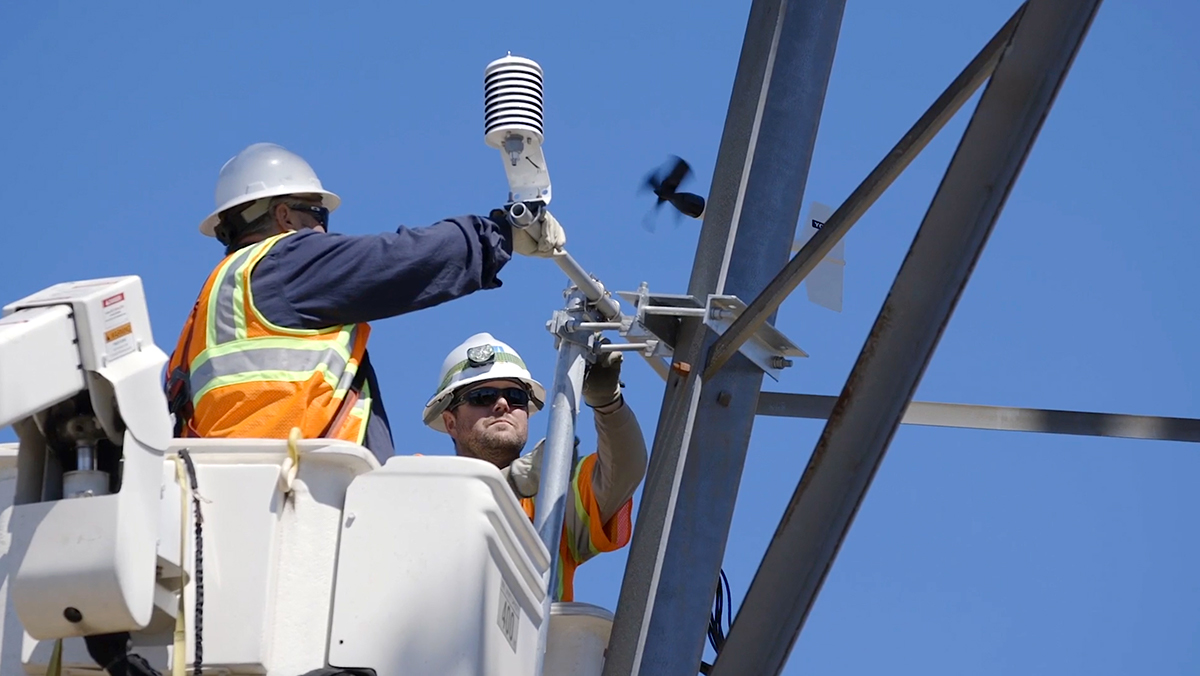
The monitoring center incorporates several technologies across PG&E’s system, including radiofrequency monitoring sensors, downed conductor detection systems, SmartDetect software, distribution fault anticipation sensors and line sensors that track changes in electric current patterns.
PG&E said the Continuous Monitoring Center represents a shift from reactive emergency response to proactive detection and prevention as California enters another wildfire season.
The facility is part of the utility’s broader wildfire mitigation efforts, which also include undergrounding power lines, Enhanced Powerline Safety Settings, Public Safety Power Shutoffs and AI-enabled wildfire cameras.